Draw routes before placing machines
A pasta workshop works best when its layout follows the product rather than the dimensions of a convenient machine. Begin with a simple process map: receipt, storage, weighing, mixing, resting where used, forming, product-specific stabilisation, packing and dispatch. Mark every point where the product is exposed. Then add the journeys made by staff, visitors, ingredients, packaging, waste and cleaning equipment.
Crossings are not automatically solved by drawing an arrow on the floor. Ask what can transfer at each crossing and what prevents it. Physical separation may be appropriate; in some smaller premises, carefully assessed time separation and verified cleaning can form part of the arrangement. The suitable solution depends on the product, hazards and local requirements. A generic online floor plan cannot approve a premises.
Control receiving and storage
Delivery checks should cover identity, condition, packaging integrity and relevant temperatures for chilled materials. Keep lot information with ingredients as they move into storage. Flour needs protection from moisture and pests, while eggs, dairy and fillings need storage suited to their specifications. Chemicals should be secured and separated from ingredients and food-contact packaging.
Packaging can introduce dirt from outer transport materials. Plan where outer cartons are removed and where clean food-contact materials wait before use. Provide enough space for stock rotation and held materials. A pallet labelled “awaiting decision” must not become indistinguishable from released stock when the workshop gets busy. Clear status identification is as important as a tidy shelf.
Give dust and water separate thought
Flour dust is an occupational exposure concern as well as a housekeeping issue. Reduce unnecessary dust generation during tipping and weighing, and assess suitable extraction and work methods. Brushing or blowing dust around the room can spread it rather than control it. Consult competent advice for ventilation, occupational health and any combustible-dust risks relevant to the equipment and quantities involved.
Wet cleaning also needs planning. Water can move residues into inaccessible areas or leave moisture where the process expects a dry environment. Choose cleaning methods for the equipment, soil and hygiene zone, following manufacturer guidance and the food-safety assessment. Do not assume that either dry wiping or hosing is suitable everywhere. Provide storage for cleaning tools so they can dry and remain identifiable.
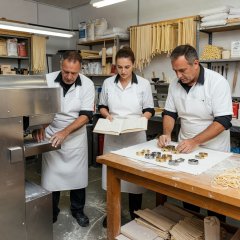
Look beyond the machine footprint.
Operators need room to load, inspect, isolate, dismantle and clean equipment safely.
Plan for hygiene between tasks
Handwashing facilities should be accessible without encouraging staff to use food-preparation sinks for the purpose. Workwear, changing arrangements and visitor procedures should fit the risk profile. A person who moves from handling waste to packing exposed finished product needs a defined transition, not an assumption that careful people will remember every step.
Wheat is an allergen, and egg, milk or other ingredients can add further allergen responsibilities. Segregation, scheduling, utensils and cleaning all need consideration. A gluten-free claim requires much more than choosing a different flour in a wheat-dust environment. Ingredient specifications, cross-contact controls, labelling and verification must support any claim made on the finished pack.
Make records usable on the floor
Each batch should connect ingredients and their lots to the process record, finished product and dispatch information. This supports investigation and traceability if a supplier reports a problem or a customer raises a concern. Include meaningful deviations and the action taken, not just a row of ticks confirming that everything looked normal.
Keep a clear route for holding and releasing product. A dryer fault, damaged seal or uncertain label should trigger an assessed decision by someone authorised to make it. Test traceability arrangements periodically. The question is not merely whether a folder exists, but whether the team can identify affected stock and customers accurately enough to act.
Size the workshop for cleaning, not only output
Capacity includes more than the nominal hourly rate of a mixer or extruder. Trays occupy space, drying creates a time commitment, chilled products need suitable storage, and cleaning takes labour. Map a normal day and a difficult day. Include changeovers, maintenance, breaks and incoming deliveries. A bottleneck at packing can undo smooth production upstream.
Food businesses in Great Britain should consult the Food Standards Agency and their local authority about registration and applicable requirements. Regulation (EC) No 852/2004 is a key reference for EU food hygiene, while the applicable legal framework must be checked for the actual country of operation. ISO 22000 offers a food-safety management-system framework; certification is not a substitute for meeting legal duties.
Reading desk: Food Standards Agency: setting up a food business; Health and Safety Executive: flour dust; Regulation (EC) No 852/2004; ISO 22000. Seek site-specific professional advice before construction or commercial production.