Start with a reference sample
A workshop needs a shared description of acceptable pasta. Keep a reference for dimensions, thickness, closure and visible defects, and refresh it when the product changes. A photograph helps, but it cannot communicate the feel of a sheet or reveal an excessively thick wall. Combine visual references with measured checks and a consistent cooking test. That gives different operators a common target without pretending that every handmade piece must look mechanically identical.
Regional traditions offer useful examples of how form follows technique. Orecchiette associated with Puglia are shaped by dragging small pieces of dough; trofie associated with Liguria use a different hand movement to create a twisted form. Sfoglia traditions in Emilia-Romagna develop broad sheets for cutting or filling. These names describe cultural practices, not a single equipment setting transferable to every flour.
Hand shaping: standardise the important parts
Handwork can accommodate subtle changes in dough, but it is also sensitive to fatigue, bench conditions and production pace. Portion size is a practical first control. If pieces start at very different weights, thickness and cooking time will drift even when each looks attractive. Observe the motion, the pressure and the bench surface rather than instructing a new maker simply to work faster.
Keep dough covered between operations and limit the amount exposed on the bench. Surface drying changes how pieces drag or seal. Flour used for dusting should be controlled too: excessive dust can alter handling and collect around equipment. Traditional wooden tools may be appropriate in particular settings, but suitability depends on cleanability, condition and the workshop’s hygiene assessment—not nostalgia alone.
Sheeting: reduce thickness in stages
Rollers turn a developed dough into a sheet through successive reductions. Large jumps can stretch the outer layers faster than the dough can accommodate, encouraging tears or unevenness. Follow the equipment instructions, use a documented pass sequence and watch the sheet rather than trusting the dial alone. Roller settings are not necessarily comparable between machines.
Measure at several positions, including the sheet edges. A middle section that looks right can hide thicker margins or inconsistent feeding. For tagliatelle and similar cut pasta, cutter condition and sheet moisture influence clean separation. For ravioli and other filled products, manage the filling’s consistency and temperature as well as the dough. Air pockets, contamination of sealing surfaces and excessive filling can all compromise closure.
Sheeted pasta
Success depends on a continuous sheet, controlled reduction, even thickness and clean cutting or reliable sealing.
Extruded pasta
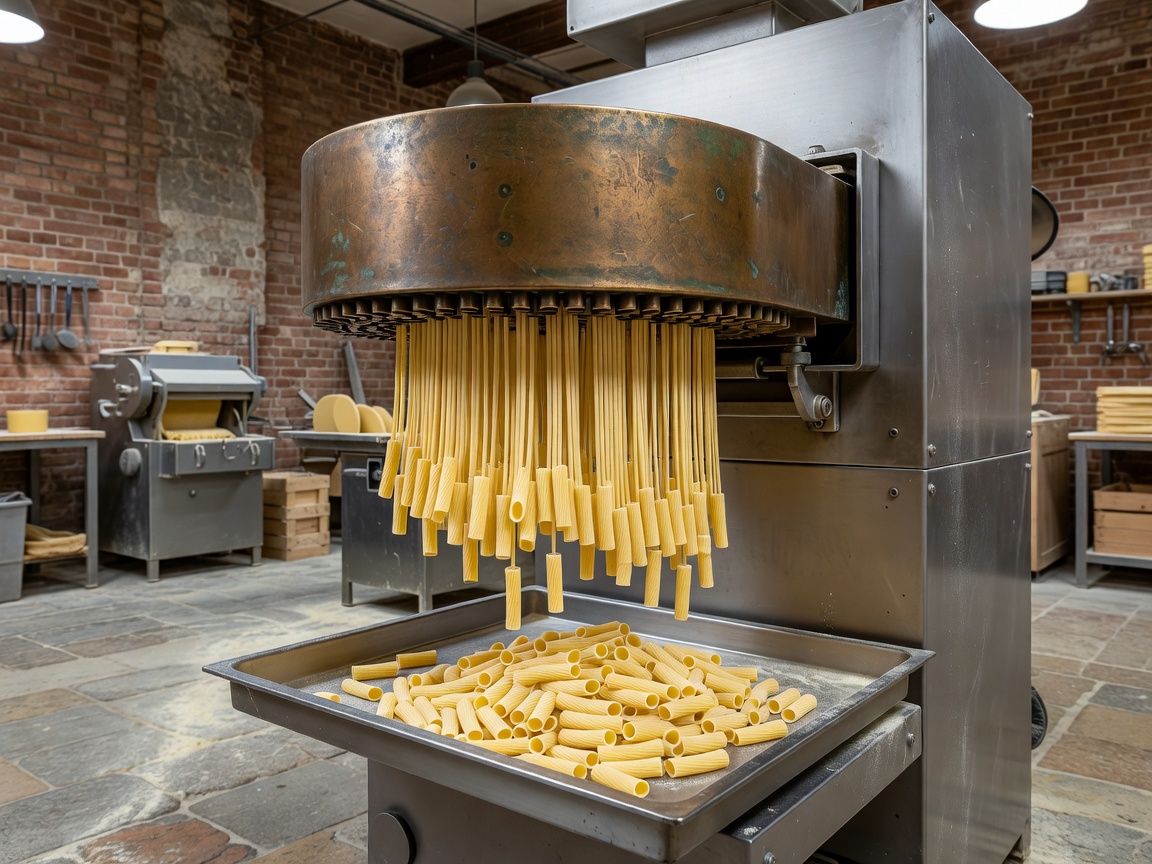
Success depends on consistent feed, suitable dough, stable forming conditions and a die matched to the shape.
Extrusion: manage the whole forming system
An extruder compacts and moves prepared material through a die. Screw geometry, feed rate, vacuum where fitted, die design and temperature influence the product together. Vacuum systems can reduce entrained air, but they do not replace sound mixing or cleaning. Product emerging at the start of a run may differ from material produced after the machine reaches its normal operating condition.
Bronze dies are widely associated with a more textured surface, while suitable low-friction inserts can produce smoother pasta. Neither material alone establishes overall quality. Formulation, machining, die wear and subsequent drying also matter. Ask a producer what the surface contributes to this particular shape and how it is maintained, rather than treating “bronze drawn” as a complete technical explanation.
Keep the shape through the next operation
Cutting speed must suit the extrusion rate and target length. Handle emerging pasta without compressing or stretching it, and distribute it appropriately on trays or supports. Long goods need suitable hanging arrangements; short goods need enough support to avoid deformation. A shape that looks perfect at the die can collapse or stick if transferred carelessly.
Inspect hollow products for blocked openings and variable walls. Split samples where necessary instead of relying only on their outer appearance. Cook checks should look for weak seams, distortion and uneven resistance. Keep rejected material separate and manage any proposed rework through an assessed procedure; it should not become an informal route for returning uncontrolled material to the mixer.
Equipment has a cleaning cycle too
Plan access to dies, cutters, guards and rollers before buying equipment. Dried residues in narrow spaces are not removed by a quick surface wipe. Follow manufacturer instructions for disassembly, approved cleaning methods and safe isolation. Never reach into moving machinery to clear a blockage. A modest production rate that allows safe cleaning can be a better workshop fit than impressive capacity with inaccessible parts.
Reading desk: Oretta Zanini De Vita, Encyclopedia of Pasta, for regional forms; Consorzio di Tutela della Pasta di Gragnano IGP, for a place-specific production tradition. Protected specifications should not be generalised to all artisan pasta.